Start with What You Know
Before crafting an innovative fusion dish, your best advantage is familiarity. Grounding your creativity in cuisines you already understand will help ensure your fusion concept feels intentional, not random.
Choose Two Cuisines You’re Comfortable With
Instead of experimenting blindly, start by selecting two culinary traditions you’ve cooked with or eaten often. The more you understand their flavors, ingredients, and techniques, the more naturally you’ll be able to blend them.
Consider where your cooking confidence lies maybe it’s Italian pasta and Korean BBQ, or Mexican street food and Japanese rice dishes
Choose cuisines with elements you personally enjoy it will make the process more engaging and authentic
Identify Key Elements from Each Cuisine
Once you’ve chosen your two base cuisines, break them down into fundamental building blocks.
Look for:
Signature ingredients (e.g., miso, tamarind, saffron)
Distinctive flavors (e.g., smoky, tangy, fermented, sweet)
Cooking techniques (e.g., grilling, braising, steaming, stir frying)
Having a list of these elements lets you begin to make smart crossovers between traditions, such as pairing the slow braise used in French coq au vin with the bold spices of Indian curry.
Respect Cultural Origins
Fusion doesn’t mean dilution. When drawing from global cuisines, it’s important to understand cultural context and avoid offensive stereotypes or gimmicks.
Learn the origins of ingredients and techniques you’re adapting
Credit your inspirations and approach them with care and accuracy
Aim for a respectful remix rather than a careless mashup
Building from what you know, while honoring what you explore, gives fusion cooking both flavor and integrity.
Theme Before Recipe
Before you hit the grocery store or fire up the stove, get clear on what you’re trying to say with your dish. Are you going for comfort fusion the kind of meal that feels like home with a twist? Maybe you’re chasing street food energy: bold, fast, affordable. Or you could take an upscale route, turning casual favorites into something that would fit on a tasting menu. The concept should steer every decision afterward, from ingredients to plating.
Now ground your idea in a story. Maybe you traveled to Bangkok and fell in love with mango sticky rice, or you grew up eating dumplings and want to layer in flavors from your Italian side. A clear narrative keeps the fusion honest, rather than gimmicky. It helps you know when to lean into tradition and when to break the mold.
Hit that sweet spot and you’re golden Korean BBQ tacos, mango lassi gelato, sushi pizza. They sound wild, but they work because there’s intent behind them.
Ingredient Pairing is the Backbone
A fusion dish lives or dies by how its parts work together. You can throw global ingredients into a bowl, but if the flavors clash or the textures fight, it falls apart fast. This is where balance becomes non negotiable.
Start with flavor. Acidity brightens. Sweetness mellows. Umami gives depth. Spice adds energy. Getting these elements to play well without one bulldozing the others is the heartbeat of good fusion. Think Thai basil pesto with a hit of lime, or mole sauce over slow smoked brisket. It’s not about mixing everything. It’s about precision.
Texture matters just as much. Crispy meets creamy. Silky offsets chewy. A smart dish layers bite and softness, pop and melt. One dimensional food gets boring fast. Fusion thrives on contrast that makes sense.
Then there’s the base. Staples like rice, noodles, tofu, chicken they’re culinary peacekeepers. They bridge cuisines without overwhelming the dish. Get these anchors right, and the rest can riff confidently around them.
Still unsure? Dive deeper into the science and art behind it: Why Ingredient Pairing Matters in Fusion Cooking.
Test Small, Adjust Bold

Don’t go full scale on your first try. Fusion flavors can be surprising, and not always in a good way. Keep your test runs tight think two portions, not twenty. This keeps you nimble and sharp, not wasteful.
When you’re tweaking a recipe, swap ingredients one at a time. Want to try gochujang instead of harissa? Make the change, taste, and evaluate. Layering too many tweaks all at once muddies the waters. Precision wins in recipe design.
Most important: get real feedback. No sugarcoating. Ask folks who know both cuisines. They’re the first to call out if something’s clashing or clicking. Their insight helps you dial in the balance you’re after. You’re not just blending flavors you’re building trust in the bowl.
Unity Through Technique
When fusion feels forced, it’s usually because the flavors don’t speak the same language. That’s where technique steps in. Shared cooking methods grilling, frying, fermentation create common ground, even when the ingredients couldn’t be more different. You’re not faking harmony; you’re building it from the pan up.
Take tempura fried polenta. One part Italian, one part Japanese, but that light, crisp bite brings it all together. Or tandoori chicken ramen smoky heat meets silky noodles, unified by broth that knows how to carry weight. These mashups work not because they’re flashy, but because the cooking makes sense.
If your ingredients feel like strangers, lean on process. A slow braise, flash fry, or char from the grill can smooth cultural edges and glue the dish together. Technique doesn’t just cook your food it’s the silent translator between cuisines.
Presentation Seals the Deal
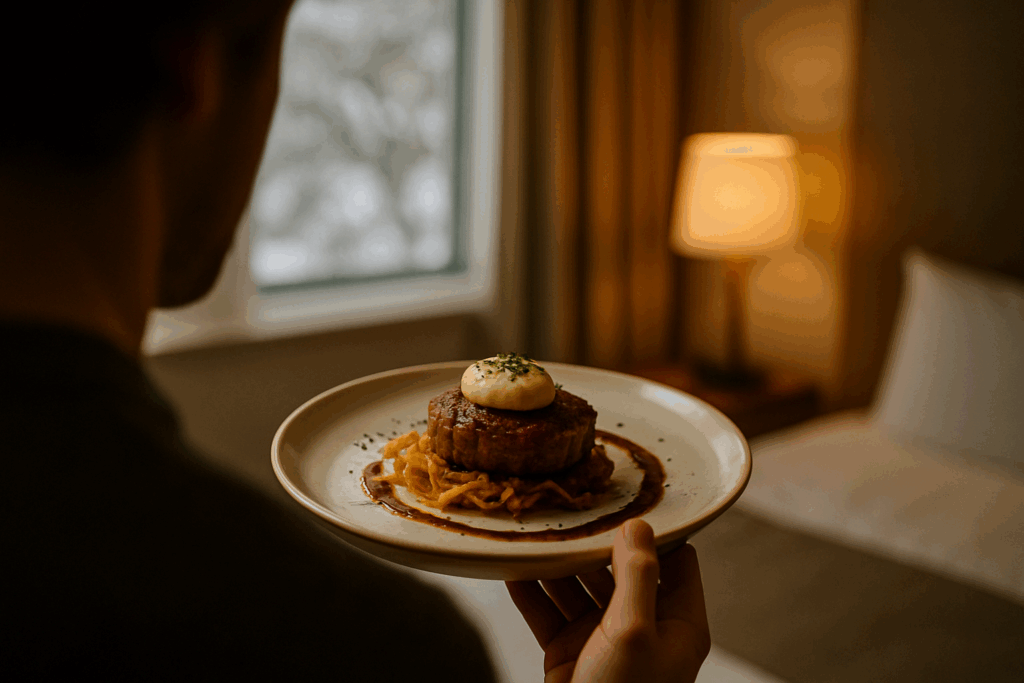
Plating isn’t just the last step it’s the encore. A well balanced plate visually reinforces your concept. If your recipe is a true fusion, your presentation needs to show that. Look at the traditional plating styles of both cuisines you’re combining. Is one minimalist and clean while the other is bold and layered? Great borrow a bit from each. Or meet them in the middle and invent your own neutral look.
Use color and shape strategically. A bright sauce swipe, a stack of contrasting textures, or even the plate itself can carry a surprising amount of narrative. Don’t just toss things together and call it rustic. Think in terms of structure: how you arrange each element tells your story before your fork does. When it works, people remember not just how your food tasted, but how it looked coming in.
Fusion deserves finish. Let the plate do some of the talking.
Final Tip: Put Your Spin On It
Creating a signature fusion recipe isn’t just about blending two cuisines it’s about expressing yourself through food. The most memorable dishes tell a personal story, reflecting your background, passions, and point of view.
Take Inspiration, Not Imitation
While it’s important to draw influence from traditional recipes, avoid copying dishes directly. Use them as a creative starting point:
Explore flavor profiles or ingredients, then give them a new context
Study the classics, then ask, “How would I make this mine?”
Respect the roots of each dish, but don’t be afraid to innovate
Make It Personal
Your fusion recipe has the potential to express more than taste it can represent where you’ve been, who you are, and where you’re going.
Think about:
Personal experiences (a dish from childhood with a global twist)
Cultural identity (honoring more than one background through flavor)
Travels that inspired flavor exploration or technique adoption
Speak Through Your Signature Dish
A great fusion dish doesn’t just work it means something.
What stories do the ingredients tell together?
What makes this dish uniquely yours?
Would someone recognize you just by tasting it?
Let your food stand for something. When you do that, fusion becomes more than novelty it becomes a form of creative authenticity.
Related Resource Worth Bookmarking:
Why Ingredient Pairing Matters in Fusion Cooking
 Ask Jacquelyn Noackerre how they got into culinary buzz and you'll probably get a longer answer than you expected. The short version: Jacquelyn started doing it, got genuinely hooked, and at some point realized they had accumulated enough hard-won knowledge that it would be a waste not to share it. So they started writing.
What makes Jacquelyn worth reading is that they skips the obvious stuff. Nobody needs another surface-level take on Culinary Buzz, Practical Cooking Tricks, Nummazaki Fusion Cuisine Insights. What readers actually want is the nuance — the part that only becomes clear after you've made a few mistakes and figured out why. That's the territory Jacquelyn operates in. The writing is direct, occasionally blunt, and always built around what's actually true rather than what sounds good in an article. They has little patience for filler, which means they's pieces tend to be denser with real information than the average post on the same subject.
Jacquelyn doesn't write to impress anyone. They writes because they has things to say that they genuinely thinks people should hear. That motivation — basic as it sounds — produces something noticeably different from content written for clicks or word count. Readers pick up on it. The comments on Jacquelyn's work tend to reflect that.
Ask Jacquelyn Noackerre how they got into culinary buzz and you'll probably get a longer answer than you expected. The short version: Jacquelyn started doing it, got genuinely hooked, and at some point realized they had accumulated enough hard-won knowledge that it would be a waste not to share it. So they started writing.
What makes Jacquelyn worth reading is that they skips the obvious stuff. Nobody needs another surface-level take on Culinary Buzz, Practical Cooking Tricks, Nummazaki Fusion Cuisine Insights. What readers actually want is the nuance — the part that only becomes clear after you've made a few mistakes and figured out why. That's the territory Jacquelyn operates in. The writing is direct, occasionally blunt, and always built around what's actually true rather than what sounds good in an article. They has little patience for filler, which means they's pieces tend to be denser with real information than the average post on the same subject.
Jacquelyn doesn't write to impress anyone. They writes because they has things to say that they genuinely thinks people should hear. That motivation — basic as it sounds — produces something noticeably different from content written for clicks or word count. Readers pick up on it. The comments on Jacquelyn's work tend to reflect that.